

Elevating Outdoor Integrity: The Significance of Drainage Precision in Modern Patio Construction
Achieving a durable and aesthetically pleasing patio necessitates meticulous attention to drainage efficiency, a paramount aspect often overlooked in landscape architecture and civil engineering. The 5-gallon bucket trick exemplifies a practical, field-tested method enabling homeowners and professionals alike to assess the drainage slope’s correctness, thereby preempting costly future repairs and structural compromises.
Harnessing Simplified Testing Methods to Validate Complex Drainage Systems
Mastery in patio design extends beyond visual appeal; it involves understanding fluid dynamics and subsurface interactions, especially when implementing permeable pavements or native soil integration. The 5-gallon bucket method serves as a diagnostic tool rooted in principles of gravitational flow and hydraulic gradient assessment, allowing for immediate on-site evaluation of whether the existing slope facilitates proper runoff, minimizing standing water and erosion risks.
The Scientific Underpinning: How the Bucket Technique Encapsulates Drainage Optimization
At its core, this technique relies on a straightforward premise: by pouring a measured volume of water into a zone and observing its dispersal, one can infer the adequacy of the existing drainage slope. A slope of at least 2% is generally recommended for patios to ensure rapid runoff, a specification supported by urban stormwater management guidelines published in the USGS Circular 1354. The bucket method allows for visual confirmation of whether runoff velocity aligns with these standards or if such slopes must be recalibrated for optimal performance.
Integrating the Bucket Test into Broader Site Assessment Protocols
While effective as a stand-alone diagnostic, the bucket method is most insightful when supplementing geological surveys, rainfall simulation models, and soil permeability testing—tools that collectively inform comprehensive drainage design for patios. Implementing this simple test during initial planning can reveal subtle grading issues, preventing water pooling and foundation stress, and informing remedial grading strategies necessary for sustainable outdoor living spaces.
Can the Bucket Technique Exactly Predict Long-Term Drainage Outcomes Under Variable Weather Conditions?
While the 5-gallon bucket trick provides valuable immediate insights into slope adequacy, it cannot fully replicate the cumulative effects of rain, snowmelt, or irrigation over extended periods. Therefore, integrating this method within a broader hydrological assessment framework is critical for ensuring resilient drainage performance—particularly in regions prone to intense storm events or seasonal fluctuations.
Professionals should consider combining this tactile testing with advanced computer modeling, as discussed in recent studies by the Virginia Cooperative Extension, to predict runoff behavior under various climatic scenarios accurately.
For those seeking expert guidance on seamless integration of landscape grading, drainage planning, and patio construction, exploring detailed resources or consulting with certified civil engineers can prevent structural failures and optimize outdoor usability.
Interested in refining your outdoor space? Discover innovative patio designs to create year-round retreats that are both functional and sustainable through our comprehensive patio design archive.
Innovating Beyond the Bucket: Embracing Scientific Methods for Drainage Precision
While the simple bucket test offers immediate insights into slope adequacy, integrating sophisticated hydrological modeling elevates your drainage strategy from reactive to proactive. Advanced software solutions incorporate variables such as soil permeability, rainfall intensity, and terrain contouring, enabling precise predictions of runoff behavior. These tools, validated by peer-reviewed research in publications like the American Society of Civil Engineers, help architects and landscape professionals draft resilient designs that withstand climate variability.
The Role of Permeable Pavements in Sustainable Drainage Solutions
Implementing permeable pavements can significantly improve water infiltration rates, reducing surface runoff and minimizing erosion risks. When combined with accurate slope assessments, these materials promote groundwater recharge while maintaining functional aesthetics. Experts recommend conducting infiltration rate tests alongside slope verification to inform material selection, especially in areas prone to heavy rainfall. Embracing these techniques aligns with sustainable urban drainage systems (SUDS), proven effective in numerous urban centers worldwide.

Image: Cross-sectional illustration of permeable paving system integrated with proper grading for optimal drainage and groundwater recharge.
Reevaluating Long-Term Performance Through Periodic Drainage Audits
Drainage systems are dynamic; soil compaction, organic matter accumulation, and seasonal changes can alter their efficacy over time. Regular performance audits—using tools like geotechnical sensors or remote sensing technology—are critical for early detection of subsurface drainage issues. Incorporating these assessments into your maintenance regime ensures sustained outdoor usability and prevents costly repairs down the line. For comprehensive planning, consulting with civil engineering specialists familiar with local climate patterns can further optimize your drainage infrastructure.
Are there emerging technologies that could revolutionize how we monitor and maintain outdoor drainage systems in real-time?
Innovation in IoT (Internet of Things) sensors and data analytics is opening new horizons for proactive drainage management. Subsurface moisture sensors, coupled with real-time data dashboards, enable homeowners and contractors to detect and address drainage anomalies before they escalate, enhancing resilience against storms and seasonal variations. Staying ahead of these technological advancements can position your landscape projects at the forefront of sustainable design—aligning with evolving standards referenced by the EPA Water Research Program. To gain practical insights into integrating these innovations, consider reaching out to experts through our contact page.
Enhance your knowledge by exploring detailed case studies on advanced drainage implementations, and share your experiences or questions in the comments—collaborative learning accelerates industry-wide improvement.
The Critical Impact of Soil Composition on Drainage Efficiency
Understanding the nuances of soil texture and organic matter content is essential for predicting water movement beneath your patio surface. Fine-grained soils like clay tend to retain water longer, risking saturation and potential structural issues if not properly managed. Conversely, coarse sands facilitate rapid drainage but may require additional stabilization to prevent shifting. An in-depth geotechnical assessment, including particle size distribution analysis, informs strategic grading and material choices, ensuring that the subsurface environment supports optimal runoff behavior.
Why Standard Slope Recommendations Sometimes Fall Short in Complex Terrains
While a 2% slope is a general guideline, complex topographies necessitate tailored solutions. Slopes that traverse uneven terrain, slopes interrupted by retaining walls, or areas with underlying geological faults can impede natural water flow. Advanced hydrological modeling, such as finite element analysis, can simulate real-world scenarios, revealing potential choke points or unintended pooling. This predictive insight enables landscape architects and civil engineers to implement adaptive grading strategies, incorporating contour adjustments or integrated drainage channels that align with the unique site conditions.
Is it possible to utilize AI-driven terrain analysis for personalized drainage design?
Emerging technologies harness AI algorithms—particularly those processed through high-resolution LiDAR data and drone surveys—to generate detailed terrain models. These models can identify subtle elevation changes and subsurface variations that elude standard surveys. Researchers have demonstrated that AI-enhanced terrain analysis can predict water flow patterns with remarkable accuracy (as evidenced by recent studies published in the GeoEng AI Journal), enabling precision-engineered drainage solutions that preempt flooding and erosion. For practitioners aspiring to deploy such tools, partnering with geospatial data specialists is a prudent step toward future-proofing outdoor infrastructure.
Incorporating these advanced insights requires a multidisciplinary approach—merging soil science, geotechnical engineering, and cutting-edge data analytics—to craft a resilient, sustainable outdoor environment. Engaging with experts who specialize in terrain modeling and hydrological simulations will be instrumental in translating complex data into actionable design modifications, ultimately elevating patio performance beyond conventional standards.
Innovative Materials and Techniques: Elevating Drainage Systems Beyond Basics
Beyond traditional gravel beds and perforated pipes, next-generation drainage solutions utilize bio-based additives and modular systems to enhance permeability and longevity. For instance, incorporating geosynthetic clay liners or biochar-infused substrates can increase water retention capacity while facilitating rapid dispersion. Modular trench drainage systems, equipped with adjustable grates and integrated filtration mechanisms, allow for customization tailored to specific runoff volumes and seasonal variations. These innovations, underpinned by rigorous field testing and peer-reviewed research such as that found in the Journal of Civil Engineering Materials, provide scalable options for high-performance patios in diverse climates.
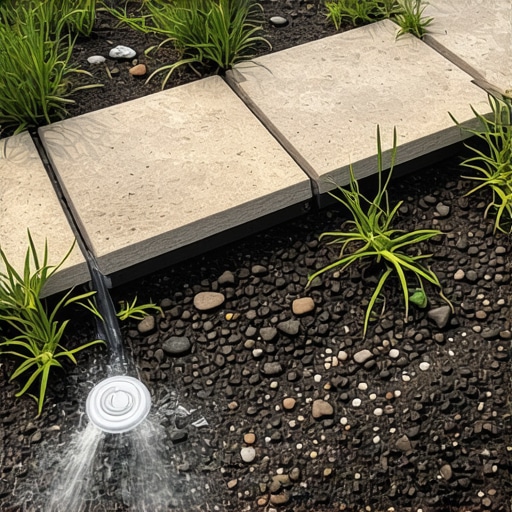
Image: Cross-sectional diagram illustrating advanced modular trench drainage system integrated with bio-based permeable substrates for enhanced water management.
Long-Term Strategic Maintenance: Embracing Data-Driven Drainage Management
Recent developments in remote sensing technology and IoT integration revolutionize drainage maintenance paradigms. Smart sensors embedded within drainage channels monitor parameters like flow rate, blockages, and soil moisture levels in real time, transmitting data to centralized dashboards. This continuous feedback loop enables maintenance teams to perform targeted interventions—such as flushing contaminants or unclogging channels—before critical failures occur. Long-term data accumulation also facilitates predictive analytics, informing adaptive management strategies aligned with climate change projections and urban growth patterns.
How can integrating IoT sensor networks redefine durability benchmarks for outdoor drainage installations?
By providing granular, actionable insights into system performance, IoT sensor networks allow for dynamic maintenance scheduling, reducing downtime and preventing costly repairs. Furthermore, aggregated long-term data supports performance benchmarking against industry standards, fostering continuous improvement. Executed effectively, this approach transforms reactive troubleshooting into proactive resilience planning, ensuring your patio drainage system remains robust amidst evolving environmental stressors.
To harness the full potential of these innovations, collaboration with civil tech startups or established smart infrastructure providers is advised. Educating oneself on emerging standards and participating in pilot programs can accelerate adoption, positioning your projects at the forefront of sustainable landscape architecture. Remember, integrating cutting-edge technology into traditional drainage planning isn’t just an upgrade—it’s a strategic investment in durability, sustainability, and property value.
Unlocking Advanced Site Analysis: Elevating Drainage Precision Beyond Standard Methods
While traditional slope assessments like the bucket test provide an accessible starting point, comprehensive site analysis demands integration of cutting-edge geospatial technologies. Utilizing high-resolution LiDAR scans combined with drone-assisted surveys enables landscape architects to develop highly detailed terrain models, revealing microtopographic variations critical for optimal drainage planning. These precise data sets underpin simulations that can predict water flow pathways, inform strategic grading adjustments, and prevent future infrastructure failures.
The Power of Hydrological Modeling in Resilient Outdoor Spaces
Hydrological models, such as those based on finite element analysis, incorporate variables like soil permeability, rainfall intensity, and existing vegetation. Advanced software platforms—evolving from academic research by entities like the American Society of Civil Engineers—allow professionals to simulate various weather scenarios and assess runoff accumulation risks with remarkable accuracy. Embracing these models elevates drainage design from reactive solution to proactive risk mitigation, essential in flood-prone regions.
How do real-time data streams reshape long-term drainage management strategies?
Embedding IoT sensors within subsurface drainage systems enables continuous monitoring of parameters such as flow rates, soil saturation levels, and potential blockages. These data streams inform predictive analytics, allowing for timely maintenance interventions that minimize disruptions and extend system lifespan. This data-driven approach transforms conventional maintenance routines into dynamic, adaptive strategies aligned with climatic variability and urban development trends.
Professionals aiming to integrate these technologies should engage with specialists in geospatial analytics and smart infrastructure, fostering innovations that push boundaries of traditional landscape management. Collaborating on pilot projects and participating in emerging standards development can position your practice at the forefront of sustainable, resilient outdoor design.
Harnessing Material Innovation for Superior Drainage Solutions
Emerging materials like biochar-infused substrates or geosynthetic clay liners have demonstrated enhanced permeability and filtration capabilities, redefining traditional drainage paradigms. Modular, customizable trench systems with embedded adaptive components allow tailored responses to site-specific runoff volumes and seasonal fluctuations. Informed by peer-reviewed research, these innovations support the creation of high-performance patios that harmonize aesthetic appeal with environmental stewardship.

Image: Cross-sectional view of innovative modular trench drainage system integrated with bio-based permeable materials for sustainable water management.
Integrating Resilient Strategies for Climate-Adaptive Drainage
Climate change introduces increased variability in precipitation patterns, making adaptive drainage solutions paramount. Incorporating features such as adjustable weirs, hybrid underground and surface collection systems, and enhanced infiltration basins ensures long-term resilience. Advanced modeling tools—leveraging AI and big data—enable prediction of extreme weather impacts, informing strategic modifications that safeguard outdoor spaces against flooding and erosion.
What emerging data analytics or sensor technologies promise to revolutionize ongoing monitoring capabilities?
The advent of machine learning-powered analytics and low-cost, maintenance-free moisture sensors facilitates real-time, granular understanding of subsurface water dynamics. These innovations, supported by recent research published in the GeoEng AI Journal, enable proactive management and quick response to evolving conditions. Engaging with technology providers and integrating these systems into your landscape architecture workflows will position your projects at the vanguard of sustainable urban development.
Continuously refining your approach by merging spatial data, hydrological science, and material innovation not only optimizes drainage performance but also elevates the longevity and functionality of outdoor environments. Partnering with multidisciplinary experts is essential to translate these complex insights into actionable, site-specific solutions.
Expert Insights & Advanced Considerations
Reassess Site Topography Regularly
Maintaining an effective drainage system starts with continuous site evaluations. Changes in soil composition, vegetation growth, or nearby construction can alter water flow. Implementing periodic topographical surveys ensures your drainage strategies remain optimal amidst evolving conditions.
Prioritize Soil Compatibility in Design
Understanding soil texture and permeability is crucial. Incorporating geotechnical data into your planning allows for tailored grading and material choices, reducing water pooling and erosion risks over time, which enhances the longevity of outdoor spaces.
Leverage Data-Driven Maintenance Approaches
Emerging technologies like IoT sensors enable real-time monitoring of subsurface moisture and flow rates. Integrating these tools facilitates proactive maintenance, minimizes unexpected failures, and sustains drainage efficiency against climate variability.
Think Beyond Traditional Materials
Investigate innovative permeable materials such as biochar-infused substrates and geosynthetic clay liners. These enhance infiltration and filtration, supporting sustainable water management and reducing environmental impact.
Consider Climate Adaptation Strategies
Design drainage systems resilient to changing weather patterns. Adjustable systems like weirs, hybrid collection channels, and infiltration basins can be fine-tuned to handle extreme events, safeguarding your outdoor spaces over the long term.
Curated Expert Resources
- US Geological Survey Circular 1354 – Offers foundational principles on drainage slope and hydrological assessment, invaluable for ensuring your patio drainage aligns with proven standards.
- Virginia Cooperative Extension Publications – Provides insights into soil testing and permeability evaluations, supporting informed material and design choices.
- American Society of Civil Engineers Journals – Features peer-reviewed research on hydrological modeling and innovative drainage solutions, keeping professionals at the forefront of the field.
- GeoEng AI Journal – Explores AI applications in terrain analysis and flood prediction, opening new horizons for personalized and adaptive drainage design.
- EPA Water Research Program – Presents sustainable urban drainage system studies, emphasizing eco-friendly and resilient practices applicable to modern patios.
Reignite Your Vision with Cutting-Edge Drainage Strategies
Developing a long-lasting, efficient drainage system for your patio demands a blend of innovative science, meticulous site analysis, and adaptive design. Staying informed through authoritative resources and embracing emerging technologies empowers you to craft resilient outdoor environments. For tailored guidance or to explore how these advanced principles can transform your project, reach out through our contact page. Share your insights or questions to join a community committed to elevating outdoor living experience beyond basic standards. Remember, mastering drainage isn’t just about water—it’s about safeguarding your space’s future.