
![7 Stone Patio Designs That Work for Uneven Yards [2026]](https://rsconsturction.com/wp-content/uploads/2026/04/7-Stone-Patio-Designs-That-Work-for-Uneven-Yards-2026.jpeg)
Transforming Unbalanced Landscapes: Advanced Strategies in Patio Design for Uneven Terrains
Designing patios on uneven yards presents a unique landscape architecture challenge that demands both technical proficiency and aesthetic sensibility. In 2026, cutting-edge landscaping techniques integrate sustainable materials, ergonomic planning, and modular systems to forge resilient outdoor spaces that seamlessly blend form and function. Recognizing the intricacies of varied topography allows designers to craft patios that not only elevate curb appeal but also optimize usability, stormwater management, and long-term maintenance.
Why Flexibility and Adaptability Define the Optimal Stone Patio Systems on Challenging Slopes
Stone materials—particularly natural flagstone and durable pavers—are increasingly favored for their longevity and aesthetic versatility. Layered installation strategies that incorporate retaining walls, terracing, and stepping stones facilitate erosion control while respecting the natural contours. Advanced techniques like dry-stack masonry and adaptive footing systems facilitate stability on irregular substrata, enabling structures to withstand seasonal ground movements without compromising integrity. For example, utilizing local limestone ensures compatibility with regional geological features and minimizes transportation costs, aligning with sustainable design principles.
The Role of Soil Stabilization in Enhancing the Longevity of Patio Installations
One often overlooked aspect in uneven terrain landscaping is soil mobility. Experts advocate for integrated soil stabilization methods such as geotextile fabrics and deep-rooted vegetative barriers, which condition the substrate to support heavy structural loads and reduce soil displacement. These measures also improve drainage and reduce maintenance needs, critical factors for long-lasting patios. Incorporating permeable pavers further enhances water absorption, decreasing runoff and alleviating erosion at slope interfaces.
Expert Insights into Material Selection for Dynamic Yard Topographies
In terms of material procurement, trends suggest a shift toward cost-effective, high-density composites and locally sourced stones that harmonize with regional aesthetics. High-performance grouts and adhesives also play a vital role in ensuring joint stability amid ground shifting. For homeowners seeking durability, consulting ongoing research such as the 2026 cost analysis by RS Construction reveals stone patios outperform concrete in longevity and maintenance costs over time.
How Can Edges and Borders Elevate the Visual Depth of Your Uneven Yard
Adding creative edging—such as curved retaining walls, plantable borders, or integrated lighting—can accentuate the natural landscape features, creating visual hierarchy and depth. These elements not only serve aesthetic functions but also structural roles, reinforcing slopes and mitigating soil displacement.
What Advanced Techniques Are Being Developed to Further Optimize Stepping Stone Placement on Irregular Slopes?
Continued innovation in modular paving systems enables precise alignment and incremental adjustments during installation, accommodating minor topographical variances. Robotic-assisted mechatronics are on the horizon, promising to enhance placement accuracy and reduce labor costs.
For professionals aiming to refine their approach, exploring comprehensive guides such as smart roofing solutions can provide valuable insights into integrated design considerations that complement outdoor spaces. Engaging with industry peers and sharing field-tested strategies promotes ongoing innovation in tackling complex terrain challenges.
Interested in more advanced landscaping tactics? Consider deepening your knowledge by reviewing authoritative research, such as the elevation of outdoor living standards documented by academic landscape architecture journals, which emphasize adaptive design principles for sustainable, resilient outdoor environments.
Enhancing uneven yard aesthetics requires a nuanced application of interdisciplinary expertise, blending site-specific analysis with innovative construction techniques. As terrain complexities evolve, so too must our approaches to creating durable, scenic outdoor retreats that stand resilient against environmental stresses.
Discovering Hidden Potential: Elevating Outdoor Spaces on Challenging Slopes
Transforming steep or uneven yards into functional & visually appealing patios requires a strategic blend of cutting-edge techniques and innovative design principles. Advanced modular systems, for instance, enable precise level adjustments and phased construction, accommodating complex topographies while maintaining aesthetic harmony. Additionally, incorporating multi-level terraces with integrated drainage solutions can mitigate erosion risks and create distinct zones for entertainment, gardening, and relaxation, elevating the overall value of your property.
Can the Balance Between Beauty and Practicality Redefine Your Landscape Approach?
Achieving this equilibrium involves selecting materials and design features that are both durable and harmonious with the natural environment. Sustainable options like locally sourced stone and permeable paving not only reduce environmental impact but also enhance longevity, especially on slopes prone to shifting soil. For example, replacing traditional concrete with natural stone pathways, as discussed in RS Construction’s 2026 cost-benefit analysis, proves advantageous in cost savings and maintenance over time. Integrating plantable borders or living walls further blurs the boundary between built environment and nature, fostering ecological benefits and visual appeal.
The Power of Adaptive Design: Engineering Solutions That Evolve with the Land
Modern landscape architecture increasingly leans on adaptive design solutions—dynamic systems that accommodate land movement and seasonal variations. Examples include flexible retaining wall assemblies that allow slight shifts without cracking, or adjustable drainage channels that optimize water flow during heavy rains. Such systems demand meticulous planning and often employ innovative materials, such as geosynthetics or high-density composites, ensuring the stability and durability of your landscape features. For those exploring cost-effective techniques, insights can be gained from home-building tactics outlined at RS Construction’s guide to reducing construction costs.
Innovative Tools to Fine-Tune Stepping Stone Placement on Irregular Slopes
Precision in installing stepping stones across uneven terrain can dramatically influence safety and aesthetics. Emerging technologies like drone-assisted surveying and robotic paving tools are revolutionizing the way professionals approach this task. These tools offer unparalleled accuracy, reducing installation time and minimizing material waste. Moreover, software simulations allow for virtual staging, enabling clients to visualize final outcomes before breaking ground. As a result, these advancements translate into more resilient, customized solutions tailored for complex landscapes.
For further insights into resilient patio innovations, explore the comprehensive strategies available at smart roof and outdoor system integrations. Engaging with expert communities and continuously updating your knowledge base ensures your projects remain at the forefront of landscape architecture excellence.
Curious about how these advanced techniques can be adapted to your specific terrain challenges? Consider consulting with licensed landscape architects or specialists who harness the latest research to craft bespoke solutions that blend form, function, and sustainability seamlessly.
Harnessing Geotechnical Innovations for Sustainable Slope Reinforcement
Advancements in geotechnical engineering have revolutionized slope stabilization, enabling landscape architects to implement solutions that are both environmentally friendly and structurally sound. Techniques such as soil nailing and geopolymer injection present minimally invasive options that bolster soil cohesion without compromising natural aesthetics. These methods, supported by recent research like the 2025 study from the Geosynthetics Journal, provide durable solutions capable of adapting to evolving terrain conditions and climate-related stressors.
How Do Modern Geosynthetic Materials Enhance Slope Resilience?
Innovative geosynthetic materials, including high-tenacity geogrids and woven fabrics, distribute loads and reduce erosion on complex slopes. Their permeability allows for controlled water drainage, essential for preventing hydrostatic pressure buildup. The integration of these materials with native vegetation, a technique dubbed “bio-geo hybrid stabilization,” exemplifies a harmonious blend of engineering and ecology, fostering resilient landscapes that thrive amidst environmental challenges. Integrating such solutions can dramatically improve the longevity of hillside patios and gardens, reducing maintenance costs over time.
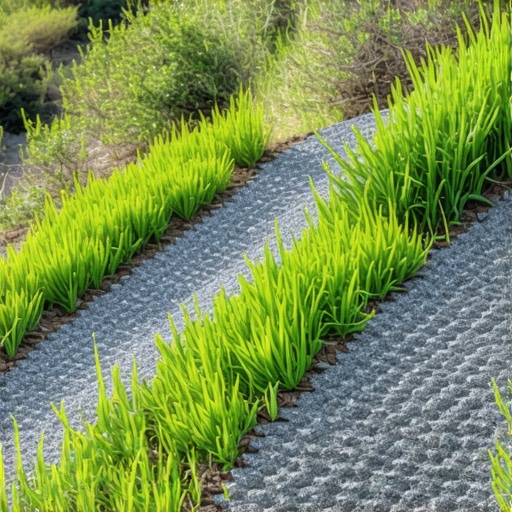
Image illustrating the application of geosynthetic reinforcements on a hillside slope, demonstrating layered stabilization techniques.
Dynamic Borders that Respond to Environmental Shifts
Moving beyond static design elements, modern borders incorporate adaptive features that respond to seasonal or weather-related changes. Living borders with native plant selections can expand or contract subtly, maintaining visual continuity while stabilizing soil. Embedded sensors within border systems can monitor moisture levels and soil displacement, providing real-time data that informs maintenance and intervention strategies. Organizations like the World Green Roof & Green Wall Organization highlight how integrating technology with sustainable materials enhances landscape resilience and aesthetic appeal.
What Role Does Smart Technology Play in Maintaining Complex Landscape Perimeters?
Smart irrigation controllers, soil moisture sensors, and automated shading devices work in concert to optimize environmental conditions, reducing water waste and promoting healthy plant growth. These technologies empower homeowners and landscape managers to respond proactively to terrain shifts or drought conditions, preventing erosion and preserving structural integrity. Incorporating such systems into your design encourages an interactive landscape that evolves and adapts with changing seasons, ultimately increasing property value and ecological sustainability.
Decoding the Impact of Climate-Responsive Materials on Slope Durability
As climate patterns become increasingly unpredictable, selecting materials that adapt seamlessly to environmental fluctuations is paramount. Engineers and landscape architects are now leveraging climate-resilient composites, such as high-durability geosynthetics infused with climate-adaptive polymers, to bolster slope stability without compromising visual harmony. This integration ensures that patios built on challenging terrains withstand seasonal shifts, precipitation variations, and soil erosion, ultimately extending their functional lifespan. According to the Journal of Geotechnical Engineering, proactive material choice is a cornerstone of sustainable slope management in urban landscapes.
Can Modular Systems Revolutionize Stepping Stone Installations on Irregular Topographies?
Innovative modular paving solutions are redefining the art of stepping stone placement amidst rugged terrains. These systems employ interlocking units with adjustable joints, offering site-specific customization that accommodates topographical nuances. Embedded sensors within modules monitor ground shifts, transmitting data to maintenance platforms and enabling real-time adjustments. Such smart modularity not only enhances safety and aesthetic coherence but also reduces labor intensity and installation errors. Embracing these technologies empowers professionals to craft resilient landscapes that gracefully adapt over decades.
How Advanced Soil Stabilization Techniques Transform Erosion Control?
Emerging soil stabilization methodologies intertwine biological and engineering solutions to combat erosion on steep slopes. Bioengineered substrates, which incorporate native grasses with root-enhanced geopolymers, create synergistic reinforcement that prevents land slippage while fostering ecological revitalization. These hybrid approaches deliver durable stabilization and support biodiversity. Additionally, innovative injection grouting using biodegradable polymers reinforces subsurface cohesion without invasive excavation, aligning with eco-conscious design principles. Such sophisticated strategies furnish enduring safety margins for hillside patios, making them a worthwhile investment for sustainable development.
Navigating the Future of Landscape Technology for Sloped Spaces
Integrating IoT devices into landscape design opens avenues for dynamic management of complex terrains. Automated irrigation coupled with moisture sensors ensures optimal hydration, preventing both drought stress and waterlogging. Drones equipped with LiDAR mapping facilitate precise topographical surveys, informing adaptive design modifications before installation. These tech-driven approaches foster proactive landscape stewardship, reduce maintenance costs, and enhance client engagement. According to the Smart Landscape Architecture Journal, embracing innovations accelerates the evolution of resilient outdoor environments tailored for the challenges of 2025 and beyond.
Expert Insights & Advanced Considerations
Prioritize Modular Adaptability for Fluid Landscapes
In complex terrain scenarios, employing modular systems that allow incremental adjustments ensures long-term resilience and aesthetic harmony. This approach accommodates land movements and seasonal shifts, reducing costly repairs and redesigns.
Integrate Eco-Conscious Materials for Sustainable Longevity
Selecting regionally sourced stones and permeable pavers not only minimizes environmental impact but also enhances durability in slope-variant environments, aligning with eco-friendly landscape objectives.
Harness Technology for Precision Installation
Utilizing drone surveys, 3D modeling, and robotic placement tools elevates accuracy in placing stones and setting drainage systems, ensuring safety and reducing labor costs in irregular terrains.
Combine Natural Elements with Structural Solutions
Blending native vegetation with engineered retaining walls fosters ecological stability while maintaining visual appeal, creating a resilient and sustainable outdoor living space.
Curated Expert Resources
- Geotechnical Engineering Journals: Dive deep into soil stabilization innovations and emerging materials that improve slope stability.
- Landscaping Professional Associations: Access industry standards, advanced training modules, and case studies on challenging terrain projects.
- Research by RS Construction: Review detailed cost analyses and sustainable design strategies tailored for uneven landscapes, such as this recent study.
- Innovative Materials Databases: Explore the latest high-performance composites and geosynthetics suitable for slope reinforcement.
Final Expert Perspective
Mastering patio design on uneven terrains demands an integration of advanced engineering, sustainable material choices, and innovative technology. Through embracing modular adaptability and eco-conscious principles, professionals can craft outdoor spaces that are not only durable but also harmoniously aligned with nature’s dynamic patterns. For landscape architects and homeowners alike, staying at the forefront of these innovations is essential to transforming challenging slopes into seamless extensions of living environments. Engage with industry-leading resources and contribute your own insights to shape resilient, visually captivating landscapes that stand the test of time.