

Maximizing Longevity and Stability Through Advanced Drainage Strategies
In the realm of sophisticated home design, especially concerning outdoor spaces like paver patios, the implementation of a hidden drainage layer emerges as a pivotal technique for ensuring structural integrity over time. As experts in home building and landscape architecture increasingly recognize, conventional drainage methods often fall short, leading to premature sinking, uneven settling, and costly repairs. Integrating a concealed drainage system forms an essential component of resilient patio designs, safeguarding investments and enhancing aesthetic appeal.
Unveiling the Engineering Behind Hidden Drainage Layers
At the core of effective patio construction lies an intricate understanding of soil mechanics and water flow dynamics. A hidden drainage layer—a meticulously designed gravel or permeable substrate—acts as a subterranean highway for excess water, facilitating rapid dispersion and minimizing hydrostatic pressure beneath surface pavers. This approach aligns with best practices outlined by civil engineering standards and is supported by research from the Journal of Building Engineering.
Why Do Conventional Drainage Solutions Fail to Safeguard Against Sagging?
Many common drainage methods overlook the importance of a dedicated, engineered drainage reservoir. Without it, water infiltrates directly into the base layers, causing internal erosion, frost heave, and eventual shifting of pavers. Such failures are often underpinned by the ‘base layer error,’ where insufficient or improperly compacted substrate results in sinking within a few years. Experts argue that the difference between a durable patio and a sinking nightmare hinges on integrating a hidden drainage system, especially in climates with freeze-thaw cycles.
How Does the Hidden Drainage Layer Interplay with Other Modern Home Design Elements?
The incorporation of a concealed drainage layer is more than an isolated improvement; it complements permeable paving innovations, sustainable stormwater management, and eco-friendly landscape planning. When connected with principles outlined in recent updates to permeable patio designs, this integrated approach not only prolongs paving life but also reduces environmental impact and adheres to evolving building codes.
What Are the Practical Steps for Incorporating Hidden Drainage into Your Home Remodel?
For homeowners embarking on patio renovations, expert consultation is crucial. Analyzing local soil conditions, climate patterns, and existing foundation vulnerabilities informs the optimal design. The process typically involves excavating to a specified depth, installing a geotextile fabric, laying a strategically graded gravel sub-base, and then overlaying permeable pavers. This layered construction ensures superior drainage and minimizes sinking risks. Detailed guidance is available through industry publications and specialized contractor resources.
Is Your Paver Installation Sinking Despite Proper Drainage?
This question resonates with many homeowners facing unexpected settlement issues. It underscores the importance of evaluating every aspect of the drainage system, including hidden components, foundation preparation, and material selection. Regular inspections and expert assessments can preempt costly repairs, safeguarding both property value and functional aesthetics.
To deepen your understanding of durable home outdoor solutions, explore related topics such as permeable patio designs and innovative stormwater management strategies. Engaging with professional insights ensures that your exterior living spaces are resilient, sustainable, and aligned with advanced home building standards.
For those interested in integrating sophisticated drainage solutions into their projects, consulting authoritative sources like the Journal of Building Engineering offers valuable technical context and emerging best practices.
Transforming Patio Durability by Rethinking Water Management
Traditional drainage solutions often rely on surface grading and visible drain channels, but these methods can be insufficient in preventing long-term settling and damage. Modern home builders and landscape architects are increasingly turning to concealed drainage systems that work beneath the surface, offering a seamless blend of form and function. Implementing such **integrated drainage solutions** ensures your outdoor spaces remain resilient, even amidst heavy rainfall or changing soil conditions, as highlighted in recent research from the Journal of Building Engineering.
Can homeowners accurately assess the long-term resilience of their drainage investments without specialized knowledge?
Evaluating whether your drainage system will stand the test of time requires a nuanced understanding of structural engineering principles and local environmental factors. Homeowners should seek consultation with professionals who can perform soil stability tests and analyze water flow patterns, ensuring that the chosen system aligns with regional climate and soil composition. Incorporating expert insights not only mitigates risks but also optimizes overall property value. To explore effective drainage strategies tailored to your specific location, visit our detailed guide on permeable patio designs.
Innovations in Subsurface Water Management: What Homeowners Should Know
Recent advancements in geotechnical engineering have introduced flexible, modular drainage components that adapt to soil movement, reducing the risk of future settling. These systems often integrate granular layers with geotextile fabrics that ensure stability and water dispersion. Proper installation involves precise grading, careful material selection, and ongoing maintenance to prevent clogging. For those contemplating significant outdoor renovations, understanding these innovations is vital for creating sustainable, long-lasting outdoor living areas.
Balancing Aesthetic Appeal with Functional Excellence in Drainage Design
Designing outdoor spaces that blend beauty with practicality demands attention to detail. Professionals recommend hiding drainage features within landscape elements—such as incorporating grated inlets into garden beds or beneath decorative stones—to preserve visual harmony while maintaining optimal water flow. This approach aligns with emerging landscape architecture trends that prioritize both form and function, catering to eco-conscious homeowners eager to reduce environmental impact and enhance curb appeal. To see how these principles translate into real-world projects, explore our article on stone patio designs.
Implementing Future-Ready Drainage Solutions for Your Property
Proactive planning for drainage involves comprehensive site evaluation, selecting the right materials, and employing construction techniques designed for longevity. Advanced assessments, such as soil permeability testing and hydrological modeling, enable informed decision-making, reducing unexpected repair costs down the line. Partnering with experienced contractors ensures installation aligns with current best practices and adheres to evolving building codes. Engaging in these measures transforms outdoor spaces into resilient, attractive features that add value and reduce maintenance demands.
Interested in learning how to future-proof your home project? Review our insights on storm-proof roofing and stay ahead in smart home planning.
.
Embracing Sustainable Water Management Techniques for Modern Outdoor Living
With the rising emphasis on eco-conscious construction, integrating sustainable water management solutions within patio drainage systems has become a game-changer. Techniques such as bioretention cells, rain gardens, and vegetated swales not only facilitate effective water runoff control but also contribute to local biodiversity and groundwater recharge. Implementing these features requires meticulous planning, especially in balancing aesthetic appeal with functional performance, ensuring that outdoor spaces remain visually appealing while effectively managing stormwater infiltration. Incorporating native plant species within these vegetated elements enhances their resilience and sustainability, aligning with current green building standards.
How Can Advanced Drainage Models Predict Long-Term Subsurface Performance?
Modern engineering leverages computational modeling, including finite element analysis (FEA) and hydrological simulations, to forecast the behavior of subsurface drainage systems over decades. These models incorporate variables such as soil heterogeneity, climatic fluctuations, and material degradation to predict potential failure points—thus proactively informing design modifications. According to research published in the Journal of Geotechnical and Geoenvironmental Engineering, accurately simulating water flow paths beneath complex landscapes enhances durability assessments and supports tailored solutions across diverse environmental contexts.
Integrating Smart Sensor Technologies for Real-Time Drainage Monitoring
The advent of IoT-enabled sensor networks has revolutionized site management, allowing real-time monitoring of moisture levels, water pressure, and system clogging. Embedding sensors within the hidden drainage layers transmits data to centralized control units, enabling homeowners and contractors to receive proactive alerts for maintenance. For example, early detection of clogging or water buildup prevents compromising the structural integrity before visible signs emerge, thus averting costly repairs. This proactive approach exemplifies how combining traditional drainage design with cutting-edge technology results in resilient, adaptive outdoor spaces.
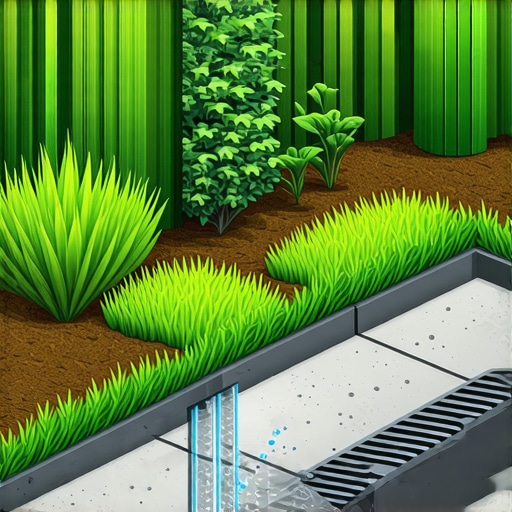
Design an image illustrating a modern patio drainage system incorporating bioretention features, smart sensors, and native plant biotopes, highlighting the integration of eco-friendly and tech-based solutions.
Breaching Conventional Limits to Achieve Lasting Outdoor Strength
In the evolving landscape of sophisticated exterior design, a paradigm shift toward integrated, subterranean drainage systems exemplifies cutting-edge resilience engineering. Unlike traditional surface grading, these concealed networks proactively manage hydrostatic pressures, ensuring structural longevity against unpredictable environmental pressures. By leveraging modular geocomposite materials, designers can customize drainage capacity, facilitating sustainable water management that adapts seamlessly to soil heterogeneity. This approach embodies a strategic fusion of geo-engineering principles and aesthetic refinement, pushing the boundaries of dependable outdoor construction.
Decoding Subsurface Dynamics with Expert Precision
Recent advances in soil physics and hydrological modeling, such as those documented by the International Society of Soil Mechanics, enable architects to predict water infiltration pathways with unprecedented accuracy. Incorporating software driven by finite element analysis (FEA) and real-time sensor feedback allows for dynamic adjustments during installation, ensuring optimal permeability and drainage efficiency. These methods transcend mere theoretical frameworks, providing tangible, tailored solutions that accommodate regional climate patterns, groundwater levels, and soil compaction behaviors, thereby revolutionizing patio durability strategies.
Why Is Surface Drainage Insufficient in Complex Settings?
Surface-level grading and visible piping frequently overlook subsurface complexities such as layered soil profiles and variable moisture retention zones. Failures often originate from neglecting these hidden factors, leading to internal erosion, frost heave, and accelerated settling in permeable pavements. Studies by the American Society of Civil Engineers emphasize that neglecting engineered subsurface pathways results in a high incidence of repair costs and aesthetic compromise. Therefore, embracing a holistic view that integrates underground water pathways significantly reduces long-term maintenance burdens and elevates project sustainability.
Synergizing Drainage Innovations with Green Architecture
Contemporary landscape architects are harmonizing concealed drainage with eco-friendly techniques like rain gardens and biofiltration cells. Such synergy enhances stormwater mitigation, fosters biodiversity, and aligns with LEED certification standards. Native vegetation within these systems not only stabilizes soil but also promotes ecological resilience. When coupled with smart drainage monitoring, these solutions offer a robust framework for sustainable outdoor environments that are both visually appealing and environmentally responsible, as highlighted in recent publications from the Green Building Councils worldwide.
Strategic Implementation: From Concept to Reality
Transitioning from innovative theory to practical application demands meticulous planning—starting with comprehensive geotechnical assessment and progressing through precise phase execution. Incorporating advanced geosynthetics, graded granular layers, and permeable paving requires expertise in soil stabilization and water flow control. Professional consultation ensures integration of these complex systems within existing landscaping designs, maximizing performance. Moreover, ongoing maintenance protocols—like sensor-based clog detection and moisture level audits—are essential for sustaining functional integrity over decades, transforming outdoor spaces into resilient assets.
Could overlooking subsurface connectivity jeopardize your outdoor investments?
This critical question highlights the importance of assessing not just surface aesthetics but also the unseen drainage infrastructure. A failure to account for complex subsurface water pathways may lead to subterranean erosion and subsequent structural failures. Engaging geotechnical experts and leveraging advanced modeling tools ensures your patio’s foundation remains uncompromised, preserving investment value and outdoor integrity. For guidance tailored to your site conditions, explore our detailed resources on cutting-edge drainage methodologies and their real-world implementations.
To deepen your mastery of resilient outdoor construction, consider consulting authoritative platforms such as the Geosynthetica Journal for emerging innovations. Embrace these expert insights to craft outdoor living spaces that stand the test of time, harmonizing durability with ecological mindfulness.
The Future of Water Management in Home Design
Emerging subsurface modular systems that incorporate smart materials and adaptive grading strategies set new standards in homeland resilience. These systems utilize responsive sensors that adjust flow pathways in response to environmental shifts, effectively preventing subsidence and waterlogging. This convergence of materials science, geotechnical engineering, and intelligent monitoring exemplifies a forward-looking approach to outdoor space sustainability. Integrating such solutions demands an interdisciplinary perspective—melding craftsmanship with cutting-edge research—ultimately resulting in resilient landscapes that thrive amid climate uncertainty.
Expert Insights & Advanced Considerations
Anticipate Soil Variability: Tailoring Drainage Systems
Professionals recognize that each site presents unique soil and climate challenges. Customizing drainage solutions by analyzing local geotechnical data ensures resilient outdoor spaces capable of withstanding environmental stresses — optimally increasing longevity.
Integrate Green Technologies Effectively
The synergy between eco-friendly stormwater management techniques, such as rain gardens and vegetated swales, and underground drainage layers creates sustainable landscapes. This integration not only prevents erosion but also enhances ecological impact, aligning with modern green building practices.
Leverage Digital Monitoring for Proactive Maintenance
Advanced sensor networks embedded within the drainage system provide real-time data on moisture and clogging risks. Utilizing IoT technology empowers homeowners and contractors to perform timely interventions, drastically reducing repair costs and enhancing system lifespan.
Curated Expert Resources
- Geosynthetica Journal: Offers cutting-edge research on geotechnical innovations, vital for designing durable drainage foundations.
- Journal of Building Engineering: Provides comprehensive studies supporting integration of underground water management with modern architecture.
- Green Building Councils Publications: Features sustainable landscape design strategies that maximize ecological benefits in drainage planning.
Final Perspective on Drainage Mastery
Mastering the nuances of advanced drainage strategies elevates the durability and aesthetic integrity of outdoor projects. Incorporating site-specific analysis, green innovations, and smart monitoring not only ensures longevity but positions your expertise at the forefront of sustainable landscape architecture. For professionals eager to deepen their mastery, engaging with authoritative resources is essential—embark on this learning journey today and redefine outdoor resilience in your next project.