
The Underlying Challenge of Durable Patio Construction in Modern Home Designs
Achieving lasting stability in patio installations extends beyond superficial surface aesthetics; it requires an in-depth understanding of foundational structural integrity. Professionals in the home building sector recognize that many issues attributed to poor patio performance—such as sinking, shifting, or cracking—often stem from overlooked initial design flaws rooted in soil preparation and drainage considerations. As the demand for aesthetically pleasing yet resilient outdoor spaces rises, especially within the context of innovative patio designs, confronting the core causes of substandard durability becomes paramount for experts dedicated to excellence.
Why Common Soil Compaction Methods Fail to Prevent Long-Term Shift
In-depth soil analysis reveals that inadequate compaction practices significantly contribute to the infamous phenomenon where paver patios shift within two years. Simply layering gravel or sand without achieving optimal density neglects the nuanced geotechnical behaviors of different soil types. Proper soil stabilization incorporates geosynthetics and controlled moisture levels to combat compaction inconsistencies. Neglecting these advanced techniques often results in the internal substratum settling unevenly, exacerbating movement and cracking. Recognizing these issues points to the necessity for professionals to adopt sophisticated soil preparation protocols grounded in geotechnical research, such as those outlined in USGS geological reports that underscore the importance of site-specific soil assessments.
The Crucial Role of Drainage Design in Upholding Patio Stability
Drainage systems are frequently underestimated in their influence over long-term patio performance. Inadequate slope grading or poor planning of water runoff pathways causes water accumulation beneath the pavers, leading to soil expansion and contraction cycles. These fluctuations trigger movement and contribute to the infamous shifting phenomena. Climate-adapted drainage solutions, integrated seamlessly into the patio design, mitigate moisture-induced soil weakening. Advanced experts leverage permeable paver systems and strategic water diverters, ensuring the subgrade remains dry and stable over time. For insights into effective drainage strategies, consult the expert analysis available at RS Construction.
How Do Material Choices Influence Long-Term Stability and Aesthetics?
Choosing robust, weather-resistant materials like interlocking concrete pavers versus stamped concrete impacts both the patio’s lifespan and its resistance to shifting. The interlocking system distributes loads more evenly and accommodates minor substrate movements without cracking, enhancing durability. Additionally, selecting materials with high permeability reduces water retention and promotes better drainage, further stabilizing the base layer. These decisions are rooted in a strategic understanding of environmental interactions, prior experience, and advanced material sciences. For a detailed comparison of material benefits, see our guide on fire-resistant and durable paver options.
What innovations in soil stabilization and drainage are revolutionizing patio longevity?
This question mirrors ongoing debates within professional forums about integrating geotechnical advancements with sustainable design. It underscores the importance of adopting cutting-edge solutions like bio-engineered soil stabilization agents and smart drainage systems that adapt to climatic variations. As technology continues to progress, experts advocate for embracing these innovations to preempt common pitfalls that lead to the premature failure of outdoor living spaces. Collaborate with industry specialists and stay informed through authoritative sources like Journal of Geotechnical and Geoenvironmental Engineering to refine your approach towards resilient patio construction.
For comprehensive insights and exchange of proven strategies, consider contributing your expertise to professional networks or consulting with specialized civil engineers. Building resilient outdoor structures not only enhances aesthetic appeal but also safeguards the integrity of the entire home investment.
,
Reshaping Soil Stabilization: Beyond Traditional Methods
While conventional soil compaction techniques form the foundation of durable patio designs, emerging geotechnical innovations are transforming industry standards. Engineers now leverage bio-stabilization agents derived from environmentally friendly microbes that bind soil particles more effectively, reducing settlement and shifting over time. These biological solutions outperform standard gravel or sand layers, especially on problematic soils prone to swelling or shrinking. Implementing these advanced stabilization methods not only prolongs patio longevity but also aligns with sustainable building practices. To explore how these technologies can be integrated into your projects, review detailed case studies documented in recent geotechnical research journals.
The Art of Water Management for Outdoor Spaces
Modern patio design must prioritize adaptive drainage systems that respond dynamically to changing weather patterns. Automated water divergence features—such as adjustable gutters and smart permeable paving—direct excess water away from critical subgrade zones, preventing erosion and soil weakening. Moreover, integrating underground retention reservoirs can buffer large stormwater events, maintaining a consistently dry environment beneath your pavers. These sophisticated systems require careful planning and precise execution; collaborating with specialists in hydrological engineering ensures optimal results. Experienced professionals recognize that investing in cutting-edge drainage solutions substantially reduces long-term maintenance costs and prevents costly repairs.
Material Science: Choosing the Right Components for Resilience
The selection of paving materials extends beyond aesthetics, serving as a vital determinant of structural integrity. High-performance concrete blends reinforced with fiber additives resist cracking and accommodate minor shifts, maintaining visual appeal over decades. Alternatively, interlocking stone systems with geometric locking mechanisms distribute loads more evenly, diminishing the risk of displacement. Material permeability also plays a decisive role: porous options facilitate water drainage and decrease hydrostatic pressure beneath the surface. Staying abreast of advancements in material sciences empowers contractors and homeowners alike to make informed choices that optimize durability and visual harmony. For an in-depth comparison of these materials, consult industry expert guides linking material properties with long-term outcomes.
How Can Emerging Technologies Reshape Future Patio Durability?
This question invites professionals to consider the potential of integrating sensors, real-time monitoring, and IoT devices into outdoor structures. Embedding moisture sensors within the subgrade can alert homeowners and maintenance teams to early signs of water infiltration or soil instability, enabling preemptive action. Similarly, utilizing predictive analytics based on climate data can inform adaptive design elements that respond proactively to environmental stresses. As innovative solutions evolve, experts advocate for adopting a systems-thinking approach—viewing patios not just as static structures but as dynamic components of home ecosystems. For further insights into these technological advances, review authoritative sources like the Journal of Geotechnical and Geoenvironmental Engineering.
If you’re interested in elevating your outdoor design projects, consider engaging with industry forums and expert networks to exchange knowledge about integrating these innovations effectively.
,
Pushing Boundaries: Integrating Smart Geotechnical Solutions for Outdoor Resilience
As the landscape of outdoor construction evolves, so does the need for innovative, data-driven approaches to ensuring patio longevity. Cutting-edge geotechnical solutions now incorporate real-time soil monitoring sensors that transmit data on moisture levels, compaction, and temperature to oversee site conditions continuously. Such intelligent systems enable proactive maintenance, allowing professionals to address minor issues before they escalate into costly failures. For example, integrating IoT devices with automated irrigation and drainage controls offers a cohesive mechanism to maintain optimal soil conditions, thereby reducing settlement risks. According to industry experts in geotechnical engineering, this fusion of technology with traditional construction methodology heralds a new era of resilient outdoor spaces that adapt dynamically to environmental stresses.

Employing sensor technology in patio construction optimizes maintenance and extends lifespan.
Reimagining Material Science: Exploring Hybrid Composites and Eco-Friendly Innovations
The pursuit of durable, sustainable patio materials has led to the advent of hybrid composites—materials that combine natural fibers with engineered polymers to provide enhanced strength, flexibility, and weather resistance. These innovative mixtures outperform traditional concrete or stone, especially in challenging climates or problematic soils. Eco-conscious design is further bolstered by the development of bio-based binders derived from renewable resources, reducing the ecological footprint without sacrificing structural integrity. Industry trials indicate that these advanced materials facilitate easier installation, reduce long-term maintenance, and contribute positively to sustainable building certifications. To stay ahead, contractors and developers should consult recent research published in journals like the Journal of Sustainable Materials and Technologies for breakthroughs in composite formulations.
Cultivating a Holistic Approach: Harmonizing Design, Technology, and Environmental Considerations
Achieving unprecedented durability in outdoor patios mandates a comprehensive perspective—one that synthesizes aesthetic vision, engineering innovation, and ecological prudence. Such an approach involves detailed site analysis, utilizing Geographic Information Systems (GIS) to understand soil variability and microclimates, alongside material selection that aligns with environmental resilience. Complementing this, landscape integration ensures that patios serve as multifunctional spaces that support biodiversity and natural water cycles. Collaborative efforts between architects, engineers, ecologists, and homeowners facilitate resilient outcomes that respect environmental constraints while fulfilling design aspirations. Leading firms are now pioneering integrative frameworks that embed these principles into standard practices, setting new industry benchmarks for outdoor durability and ecological harmony.
Harnessing Next-Generation Soil Stabilization Techniques for Enduring Outdoor Spaces
Contemporary patio construction increasingly leverages innovative soil stabilization methods, transcending traditional compaction efforts. Bio-engineered solutions, such as microbial-induced calcite precipitation (MICP), introduce environmentally friendly functions that bond soil particles more effectively, thereby significantly reducing settlement and shift over time. Integrating these bio-stabilization agents into foundational layers not only enhances durability but aligns with sustainable building standards. Industry-leading case studies, detailed in specialized geotechnical journals, demonstrate how these techniques can arrest the progression of soil-related issues that plague conventional approaches.
Engineering Water Flow to Combat Long-Term Shifting
While surface-level drainage may seem sufficient, advanced experts understand that subsurface water management is crucial for maintaining patio integrity. Implementing smart slope design, coupled with underground retention systems, creates a dynamic response to fluctuating precipitation patterns. Such systems are engineered to divert water precisely where it is least likely to cause soil weakening, minimizing the cyclical expansion and contraction that lead to shifting. Strategic placement of permeable paving and controlled water dispersal ensures the underlying soil remains dry and stable, a principle supported by research from the USGS’s comprehensive hydrological studies.
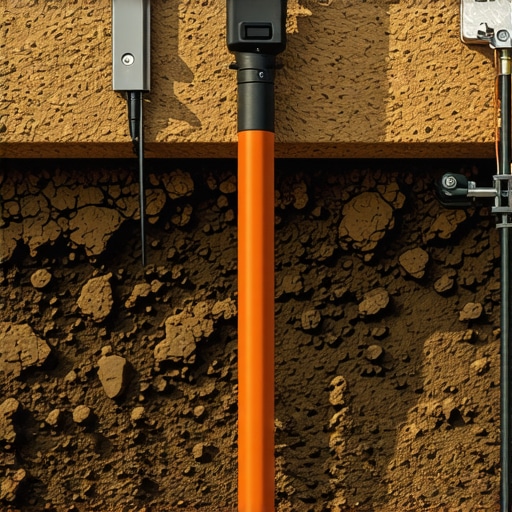
Innovative drainage engineering shields patios from moisture-induced degradation, preserving their longevity.
Selecting Materials That Endure Winds and Seasons
The material science frontier offers high-performance composites and hybrid materials designed specifically for outdoor resilience. Polymeric reinforced concrete and interlocking concrete pavers with enhanced geometries distribute loads efficiently and absorb minor substrate movements, preventing the cracks that typically compromise durability. Furthermore, selecting high-permeability materials facilitates water egress, reducing soil saturation and movement. Developers and contractors benefit from staying informed about cutting-edge materials through specialized resources like the American Concrete Institute, which provides in-depth guidance on sustainable, weather-resistant options.
Innovating Soil-Informed Design with Embedded Sensors
Emerging geotechnical innovations incorporate embedded sensors within the substrate, transmitting real-time data on moisture content, temperature, and density. These intelligent systems empower proactive maintenance strategies, allowing for adjustments before minor shifts evolve into structural failures. IoT-enabled monitoring, integrated with automated water management controls, offers a sophisticated approach to adaptive resilience. Recognized leaders in geotechnical engineering advocate for these advancements, emphasizing that a data-informed perspective can dramatically extend the functional lifespan of outdoor patios, thereby safeguarding homeowners’ investments and enhancing aesthetic longevity.
Embedded sensors enable continuous assessment, transforming patio maintenance from reactive to predictive.
The Promise of Eco-Conscious, High-Performance Materials
Research into bio-based composites and hybrid eco-friendly materials reveals pathways to sustainable yet formidable outdoor structures. These innovative materials, reinforced with renewable fibers and bonded through bio-adhesives, outperform traditional options under environmental duress. Their ease of installation, combined with superior longevity and minimal maintenance needs, positions them as future standards in sustainable patio design. For practitioners seeking detailed formulation insights, recent publications in the Journal of Sustainable Materials and Technologies provide comprehensive evaluations and case studies.
Integrating Smart Technologies for Dynamic Resilience
The fusion of geotechnical engineering with smart technology heralds a new era of outdoor resilience. Utilizing sensors, artificial intelligence, and adaptive infrastructure components allows for real-time response to environmental stresses. Automated systems can adjust water flow, reinforce foundational elements, or even reconfigure paving layouts dynamically. Such innovations, championed by industry pioneers, promise outdoor spaces that actively respond and adapt to climatic and soil conditions, reducing the need for reactive repairs and ensuring consistent structural integrity. Engaging with these technological frontiers propels patio design into a future where resilience is intrinsic, not reactive.
Expert Insights & Advanced Considerations
Embrace Site-Specific Soil Testing
Implementing detailed geotechnical assessments tailored to each property’s soil conditions is fundamental for long-lasting patios. This proactive approach helps identify latent instability issues, ensuring foundational resilience against shifting or settling over time.
Prioritize Seamless Drainage Integration
Designing drainage systems that harmonize with the landscape and incorporate smart water management techniques prevents moisture accumulation beneath paving, thereby safeguarding structural integrity and extending lifespan.
Opt for Conditional Material Selection
Choosing materials with proven performance in local environmental conditions—such as high-permeability pavers or fiber-reinforced concrete—enhances durability and maintains aesthetic qualities amid weather extremes.
Leverage Technological Innovations
Integrating embedded soil moisture sensors and IoT-controlled drainage systems facilitates real-time monitoring, enabling preemptive maintenance that avoids costly repairs caused by undetected soil instability.
Adopt Sustainable Stabilization Methods
Utilizing bio-engineered soil stabilization agents, like microbial-induced calcite precipitation, can significantly reduce settlement issues while aligning with eco-friendly building practices—setting new standards in outdoor resilience.
Curated Expert Resources
- US Geological Survey (USGS) Publications: Offers in-depth geotechnical research vital for understanding soil behaviors pertinent to patio durability.
- RS Construction’s Drainage Strategy Guides: Provides advanced methodologies for designing water management systems that prolong outdoor space lifespan.
- Journal of Geotechnical and Geoenvironmental Engineering: Features cutting-edge studies on innovative soil stabilization and monitoring technologies.
- American Concrete Institute (ACI): A key source for selecting high-performance, weather-resistant materials suitable for resilient patio construction.
- ScienceDirect’s Sustainable Materials Journal: Contains comprehensive insights into bio-based composites and eco-friendly innovations shaping future outdoor surfaces.
The Promise of Resilience and Innovation
In the realm of patio construction, embracing a holistic strategy that integrates site-tailored geotechnical practices, cutting-edge materials, and smart technology defines the frontier of durability. Recognizing the importance of precise soil stabilization, dynamic water management, and innovative materials not only safeguards your outdoor investment but also elevates aesthetic longevity. For professionals and homeowners eager to push beyond traditional limitations, engaging with these authoritative resources and pioneering techniques paves the way for outdoor spaces that withstand the test of time and the forces of nature. Ready to deepen your expertise? Join industry forums, collaborate with specialists, and contribute your insights to advance resilient patio design practices—because the future of outdoor durability demands our collective innovation.